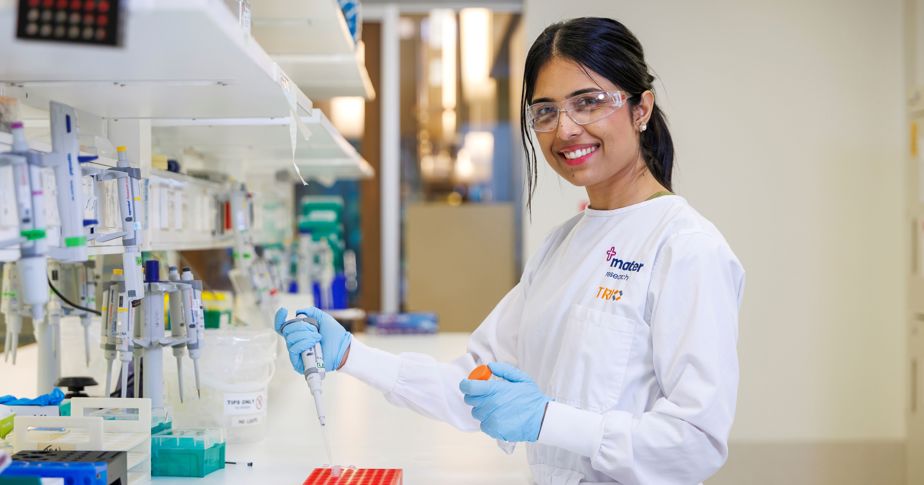
In a world-first discovery, Brisbane researchers have identified a rare genetic mutation that causes ulcerative colitis, a chronic and debilitating bowel disease – offering new hope for earlier diagnosis and targeted treatment for patients.
The discovery was made by researchers at Brisbane’s Mater Research and The University of Queensland, who studied three generations of a family treated at Mater Hospital Brisbane for severe, treatment-resistant ulcerative colitis.
Ulcerative colitis (UC) is a chronic inflammatory bowel disease (IBD) that causes inflammation and ulcers in the inner lining of the large intestine, or colon and rectum.
The disease affects around 80,000 Australians and, in aggressive cases, surgical removal of the colon is required to ease its symptoms.
The Queensland team collaborated with US experts at Harvard Medical School and Mass General Brigham, as well as Australian researchers at Melbourne’s Monash University, to conduct the long-term study.
Using advanced genetic sequencing, the team identified a mutation in the Brisbane family’s OTUD3 gene, which the team determined plays a critical role in maintaining the gut’s protective barrier. When this barrier fails, bacteria can invade the gut lining and trigger chronic inflammation.
The study, Pathogenic OTUD3 Mutations Predispose to Ulcerative Colitis Due to Barrier Dysfunction, has been published in the journal of Cellular and Molecular Gastroenterology and Hepatology.
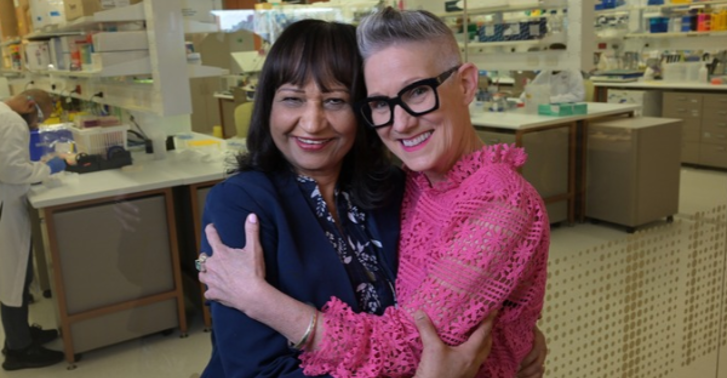
Lead author Dr Rabina Giri, a member of Mater Research’s Inflammatory Bowel Disease Group, said the ground-breaking study was the first to link OTUD3 to intestinal health.
“We’ve known this gene plays a role in cancer biology, but now we’ve shown it’s essential for maintaining the integrity of the gut lining. When it’s disrupted, inflammation follows,” Dr Giri said.
Using cutting-edge technologies, the researchers demonstrated that OTUD3 dysfunction is not only present in patients with the rare mutation, but also in many others with UC.
“Importantly, this suggests that the gene plays a broader role in disease development for a significant number of those affected by ulcerative colitis,” Dr Giri said.
Dr Giri said that the discovery could lead to a new class of therapies focused on restoring gut barrier function – potentially transforming the lives of more than 100,000 Australians living with IBD.
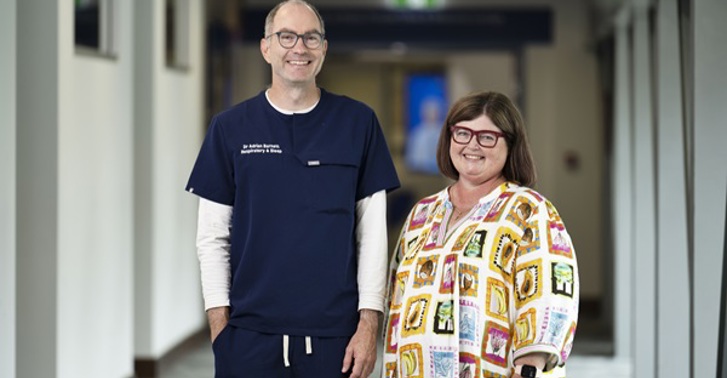
Associate Professor Jake Begun, Leader of Mater Research’s Inflammatory Bowel Disease Research Group and Director of Gastroenterology at Mater Hospital Brisbane, said the discovery opened the door to new diagnostic tools and therapies to target the gut lining of UC patients, rather than just their immune system.
The research enabled an early diagnosis of ulcerative colitis in a young member of the Brisbane study family, allowing specialists to treat him successfully without the removal of his colon.
“This study highlights the importance of genetic research in uncovering hidden causes of chronic diseases and provides a new model for studying UC in the lab,” A/Prof Begun said.
Collaborator and co-corresponding author Dr Manish Gala, who is an attending gastroenterologist at Mass General Brigham, said that the findings established OTUD3 as a central regulator of ulcerative colitis in individuals both with and without pathogenic variants in the gene.
“This underscores the critical role of the epithelial barrier in disease pathogenesis – an area long overlooked in current drug development efforts,” he said.
“In the course of this work, we also generated the first pre-clinical model that spontaneously recapitulates key features of human disease at physiologic gene dosage.”