
Skip to main navigation Skip to content

Search whole site

Iron infusion

Patient information

Adult and child/young person informed consent patient information

Our bodies need iron. Iron is used to make haemoglobin, this is the part of the red blood cell that transports oxygen around the body. Iron is also important for muscle strength, energy and mental function. If your iron levels are low you may feel tired and not be able to perform your normal daily activities. As the iron levels drop lower, the haemoglobin levels drop below normal. This is known as iron deficiency anaemia. The most common way to treat iron deficiency is to take iron by mouth as a tablet or liquid. This works for most people and is usually tried first.

1. What is an iron infusion and how will it help me/the patient?

  • You might need an iron infusion if you:
  • Are not able to take iron tablets/liquids.
  • Are not responding to iron tablets/liquids.
  • Need to increase your iron levels quickly (e.g. before major surgery, late in pregnancy or to avoid a blood transfusion).
  • If you have chronic kidney disease, chronic heart failure, or inflammatory bowel disease.

Sometimes more than one iron infusion is required to fully elevate your iron levels.

An intravenous (IV) iron infusion is an infusion made up of iron, not blood, that is infused directly into your bloodstream. A plastic cannula is placed into one of your veins and is attached to a pump that infuses the iron into your body. Iron infusions work faster to  replace iron than tablets or liquids taken by mouth.

Staining of the skin from intravenous iron is uncommon, but when it occurs the stain can be long lasting or permanent. The leakage occurs in the area around the cannula (drip site) into the surrounding tissues.

 Iron use in children

The product information for each of the following products state they are not indicated for use in children; however, iron infusions are commonly used in children. This is called off-label use and is common in paediatric medical practice. If you have any questions about off-label use, please discuss these with your doctor/nurse/midwife. 

The information in these guides refers to the best available evidence and best practice protocols that support the safety and benefit of these products for paediatric use.

All the iron products listed on this consent form have Australian marketing approval from the Therapeutic Goods Administration (TGA). The Australian approved product information lists the approved indications (uses) and any age restrictions. Off-label use occurs when an iron infusion is prescribed outside the approved product information (either the indication or the age restriction) and is common in paediatric medical practice. A doctor/nurse/midwife will discuss the suitable treatment options for your child.

The indications and age restrictions for iron infusion are as follows:

Ferric Carboxymaltose (Ferinject®)

• Treatment of iron deficiency when oral iron preparations are ineffective or cannot be used.

• The diagnosis must be based on laboratory tests.

• Precaution: The product information states that Ferric Carboxymaltose is not recommended in children under 14 years.

Ferric Derisomaltose (Monofer®)

• Product information states that Ferric Derisomaltose Iron Supplement is for adults 18 years and older, for use in iron deficiency when oral preparations are ineffective, inappropriate or when rapid iron delivery is necessary.

Iron Polymaltose (Ferrosig®)

• Product information states that there is no age restriction.

• Treatment of iron deficiency anaemia when oral therapy is contraindicated, gastrointestinal absorption of iron is defective or when patient noncompliance or persistent gastrointestinal intolerance makes oral therapy impractical.

• Iron supplement for Iron deficiency anaemia where oral treatment not appropriate or gastrointestinal absorption is defective. 

Iron Sucrose (Venofer®)

• Treatment of iron deficiency anaemia in patients undergoing long-term haemodialysis and who are receiving supplemental erythropoietin therapy (a drug used to stimulate red blood cell production in bone marrow for anaemia).

• The diagnosis of iron deficiency must be based on appropriate laboratory tests.

• Precaution: The product information states that the safety and efficacy of Iron Sucrose in children has not been established.

Preparing for treatment

Before you have an iron infusion, you must tell your doctor/nurse/midwife and the nurses performing the infusion if you:

• Are pregnant/trying to get pregnant, as an IV iron infusion should be avoided in the first trimester.

• Have a history of asthma, eczema or other allergies.

• Have had a reaction to any type of iron injection or infusion in the past.

• Have a history of high iron levels (haemochromatosis) or liver problems.

• Have (or may have) an infection at the moment.

You may want to ask your doctor/nurse/midwife about the following:

• Why do I need an IV iron infusion?

• What are the other options?

• How many infusions will I need to get enough iron?

• (If you are currently taking iron tablets/liquids) When do I stop taking the iron tablets/liquids and will I need to use them again?

• How long will it take for my iron levels to improve?

• Any questions about side effects that may worry you.

The day of the treatment

There is preparation needed for an iron infusion.

Here are some useful tips:

• It is helpful if you are well hydrated prior to your iron infusion so that putting in a cannula may be easier.

• Have your regular breakfast/lunch – you do not need to fast.

• Take all your regular medications.

• Tell your nurse/midwife administering the iron infusion if you are pregnant or not.

• If you experience any side effects, inform your nurse/midwife immediately.

• Adults can drive home after the iron infusion and all patients can resume usual activities (unless you experienced an unexpected reaction and medical staff inform you otherwise).

• Very little iron crosses into breast milk so breastfeeding mothers may safely breastfeed.

During the treatment

The duration of the iron infusion varies depending on the product used. Your iron infusion may take 15 to 30 minutes, 1 to 2 hours or 4 to 6 hours.

You will also need to allow time for the IV cannula to be inserted and removed, and for clinical observation before and after the iron infusion (30 to 60 minutes).

Iron infusion

There are risks and complications with this procedure. There may also be risks specific to each person’s individual condition and circumstances. Please discuss these with the doctor/nurse/midwife and ensure they are written on the consent form before you sign it.

Risks include but are not limited to the following:

Common risks and complications

  • Low blood pressure
  • Palpitations
  • Facial flushing
  • Dizziness
  • Vomiting and nausea
  • Headache
  • Injection site reactions (see also below skin staining in rare risks)
  • Joint and/or muscle pain
  • Changes in taste (e.g. metallic)
  • (Ferric carboxymaltose [Ferinject®] only) hypophosphataemia (low blood phosphate level). This can cause muscle weakness, respiratory failure, heart failure and in rare circumstances osteomalacia (bone softening), fractures, seizures and/or coma. You may require oral medication to raise your blood phosphate level.

Uncommon risks and complications

  • Dizziness and feeling faint
  • Chest and/or back pain
  • Chills and fever
  • Skin irritation and rash
  • Swelling of the face, mouth and limbs
  • Generalised lymphadenopathy (swollen lymph nodes)
  • Difficult breathing.

Rare risks and complications

  • Anaphylaxis – rare and usually occurs in the first few minutes of the iron infusion and is characterised by breathing difficulties, which may be life threatening. You will be closely monitored whilst the iron infusion is given and for at least 30 minutes
  • Rapid heart beat (tachycardia) and low blood pressure
  • Skin staining (brown discoloration) may occur due to leakage of iron into the tissue around the cannula (drip) site. This is not common, but the stain can be long lasting or permanent
  • That’s why it’s important to tell your nurse if you experience any pain, discomfort, burning, prickling, redness, staining or swelling at the cannula (drip) site
  • Death as a result of this procedure is possible. You will be closely monitored whilst the iron infusion is given and for at least 30 minutes following completion.

This treatment does not require an anaesthetic.

What are the risks of not having an iron infusion?

There may be health consequences if you choose not to have the proposed treatment. Please discuss these with the doctor/nurse/midwife.

If you choose not to have the treatment, you will not be required to sign a consent form.

If you have signed a consent form, you have the right to change your mind at any time prior to the treatment. Please contact the doctor/nurse/ midwife to discuss.
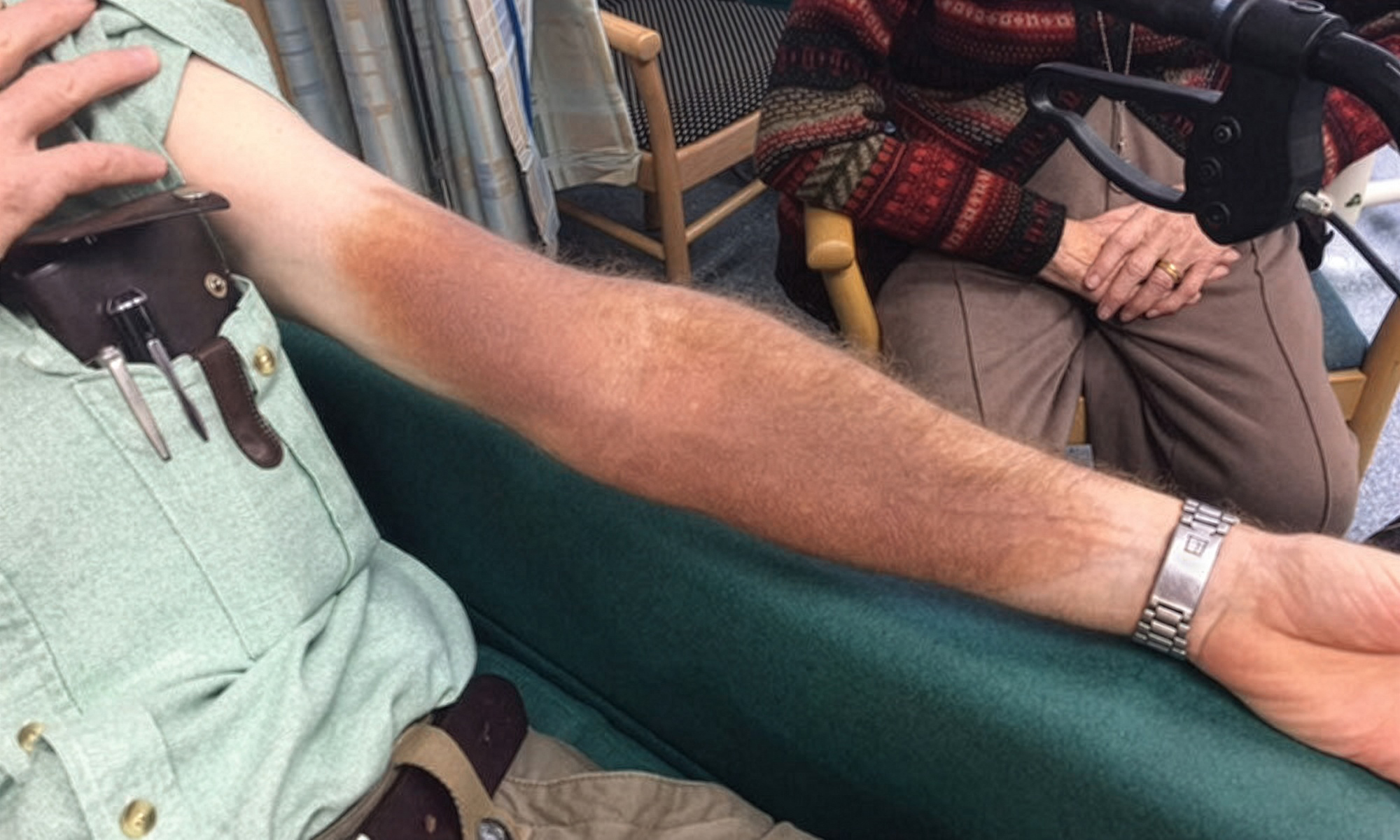
Example of skin staining

Example of skin staining


Making the decision to have a procedure requires the patient/substitute decision maker/parent/legal guardian/other person* to understand the options available. Please discuss any alternative treatment options with your doctor/nurse/midwife before signing the consent form.


In some cases, iron tablets/liquids are recommended after the infusion. If oral iron therapy is recommended it should not start until at least one week after your IV iron infusion as the iron within the tablets/liquids will not be absorbed.

Tell your doctor/nurse/midwife or seek urgent medical attention/call an ambulance (000) if you have:

  • Chest pain
  • Trouble breathing
  • Dizziness
  • Neck/mouth swelling.

A doctor/nurse/midwife other than the consultant/specialist may assist with/conduct the clinically appropriate treatment. This could be a doctor/nurse/midwife undergoing further training, all trainees are supervised according to relevant professional guidelines.

If you have any concerns about which doctor/nurse/midwife will be performing the treatment, please discuss with the doctor/nurse/midwife.

Please ask the doctor/nurse/midwife if you do not understand any aspect of this patient information sheet or if you have any questions about your/the patient’s medical condition, treatment options and proposed treatment.

If you require additional information about the intravenous iron preparation prescribed for you, please speak to the clinician/doctor/nurse/pharmacist who can arrange to provide you with a Consumer Medicines Information (CMI) leaflet.