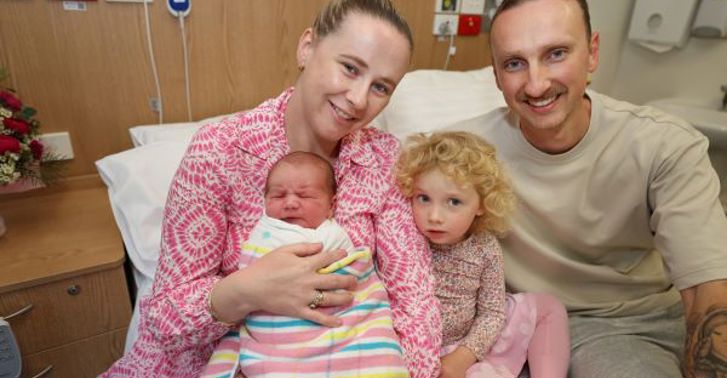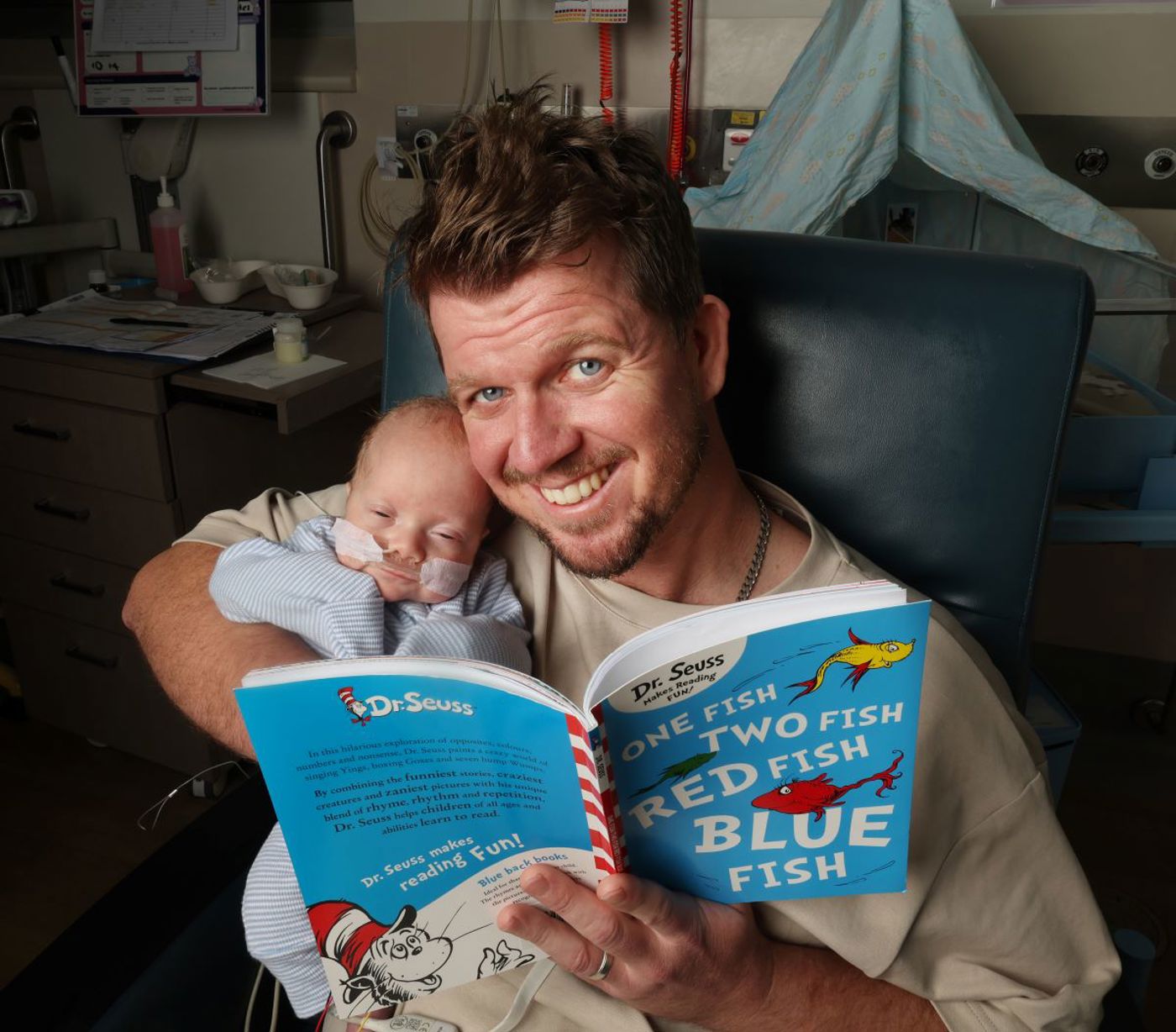
Born at just 27 weeks, Oliver, arrived at the Mater Mothers’ Hospital in South Brisbane weighing less than a kilogram. For the last 100 days he’s been receiving around-the-clock care as he continues to grow stronger.
But despite development challenges his little ears are functioning as well as most adults and his dad, Tom, is taking every chance he gets to make the most of that.
"I love reading to him, it's something we've done since he was born," said Tom.
"It's been a great way for us to bond.
"He’s really starting to engage - you can see his facial expressions change the moment I start talking.
“It’s one of my favourite parts of the day."
The little bookworm will play a part in the Mater Mothers’ Hospital read-a-thon. An initiative aimed at encouraging parents in neonatal units to read to their newborns every day.
Mater Clinical Nurse, Julia Maguire, is helping to ensure there are enough books on hand for parents, staff and volunteers to take part.
“There are trackers that we pop at the bedside which families can fill out as they read to their babies,” said Ms Maguire.
"We have an abundance of books for families to choose from, and we are constantly rotating them so there is variety."
Research shows babies love hearing their parent’s voice over any other sound. Mater Occupational Therapist, Gillian Miller says hearing it supports brain development, reduces stress, strengthens bonding and improves language skills.
“Parents can sometimes feel helpless in a neonatal ward as they often can’t do all the things they expect to do as a new parent – feeding, picking their baby up - but they can read and that is a really important parenting activity that provides a unique connection,” said Ms Miller.
"There is a different lull, tone and rate that you read with your voice and that's shown a significant connection with language development.
"We know babies can start to recognise their parents' voices as early as about 28 weeks gestation, which is pretty amazing.”
Just a few minutes of reading can be sufficient to have a positive and lifechanging impact. Studies show children who aren’t read to from a young age can face a million-word gap by the time they start school.
Mater Speech Pathologist, Cassie Rossow says reading is one of the best free activities you can do to support brain development.
“We know that children who are exposed to books and reading from a younger age have better a cademic success and better learning outcomes,” said Ms Rossow.
“It’s a great way to immerse them in the sounds and rhythms of speech, which is crucial for language development.
"Comprehending the words isn't really the point with babies this young - it’s just about hearing a familiar voice and the benefit that provides is invaluable.
The read-a-thon runs until August 28 with staff hoping to rack up the most hours of reading across all Australian and New Zealand neonatal wards.