Doctors have expressed fears that President Trump’s executive order on childhood immunisations could increase misinformation on social media and further lower immunisations rates in Australia.
The order advocates a reduction in the number of diseases and viruses that US parents are advised to protect their children against, as well as separating the measles, mumps and rubella (MMR) vaccine into three separate, single-disease shots.
The push has been labelled by many as scientifically baseless and potentially damaging.
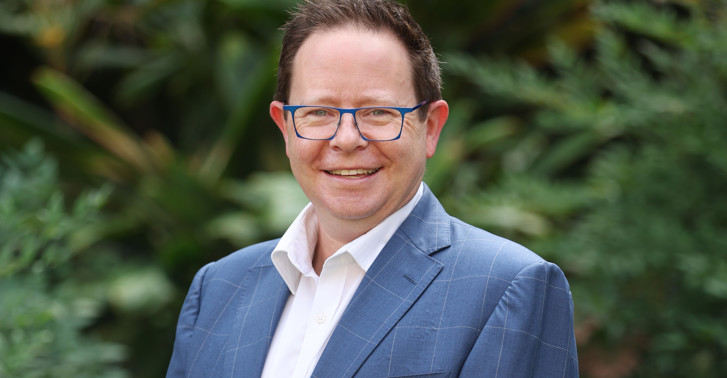
Director of Infectious Diseases at Mater, Professor Paul Griffin, has raised concerns about the impact Trump’s recommendations could have in Australia.
“There is a lot of misinformation on social media and AI platforms already and it only creates further uncertainty and distrusts for parents,” said Professor Griffin.
“The long-term consequences of demoting certain vaccines could be very damaging to public health.
“Cutting hepatitis B could have very significant implications for a disease that can have devastating consequences and that we have controlled relatively well with the vaccination program currently in place.
“These sorts of decisions should be left to the genuine experts, basing their recommendations on robust data, not to those who may not necessarily have the level of knowledge required to make informed decisions.”
Queensland has the worst levels of childhood immunisations nationally, with the Sunshine Coast the lowest rates in the country for children under 5.
The number of parents choosing to immunise their kids has continued to plummet since 2021, with vaccination rates for one-year-olds dropping more than 5 percent nationwide.
“It's really disappointing to see measles circulate to the magnitude that it is, including with some cases of severe disease and even death,” said Professor Griffin.
In Australia, children are currently recommended to receive the MMR vaccine at 12 months of age and again at 18 months, providing lifetime protection.
Splitting the dose could result in more than six different doses in a child’s early years and could also come at a cost, with the vaccine currently free as part of the National Immunisation Program.
“There is no evidence to support the separation of the MMR vaccine – splitting it would actually pose several complications,” said Professor Griffin.
“The biggest concern is it’s going to increase the number of visits and therefore costs, which could see people perhaps not get all of the vaccines as scheduled, and reducing protection.
“The supply would also change because the vaccines aren’t routinely manufactured separately.”
While President Trump has long expressed doubts about the safety of MMR vaccines and their link to autism, Professor Griffin said there is simply no evidence to substantiate such claims.
“We know definitively that Andrew Wakefield’s 1998 paper linking the MMR vaccine to autism has been retracted, based on its poor quality and essentially fraudulent propositions,” said Professor Griffin.
“The vaccine for measles remains safe and it’s one of the most effective vaccines available.
“We have excellent guidelines for our National Immunisation Program.
“Information and new data is constantly being reviewed by teams that will revise those guidelines appropriately.
“We’ve made some changes to pneumococcal vaccination recently, which is a good example of that.”