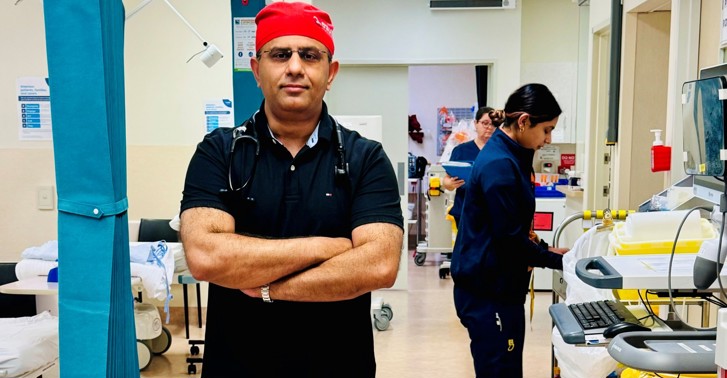
Dr David Wheatley has performed thousands of surgeries on human patients with fractured bones but for the first time in his decade long career, he’s applied his expertise to the animal kingdom.
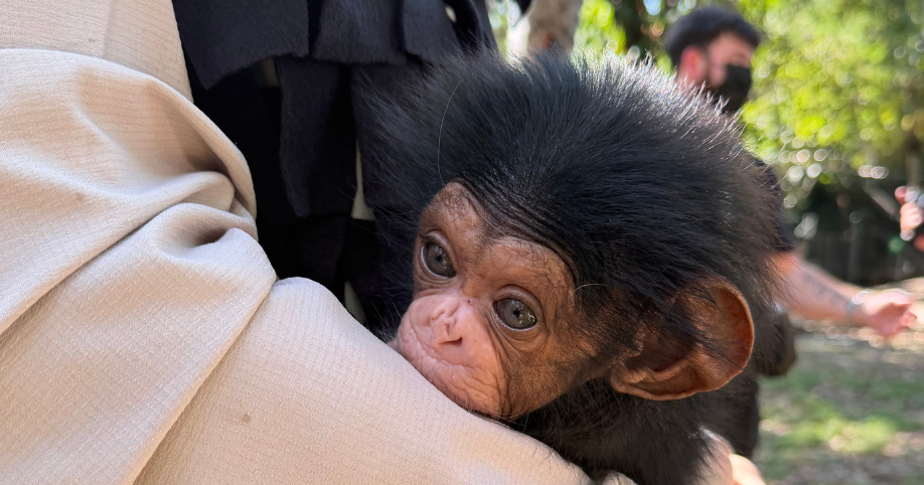
The Mater orthopaedic surgeon received a call from Rockhampton Zoo vet, Dr Greg Muir, asking if he could take a look at a newborn chimp who had a suspected broken leg. The female infant was only a few hours old when it had a fall, resulting in a broken femur.
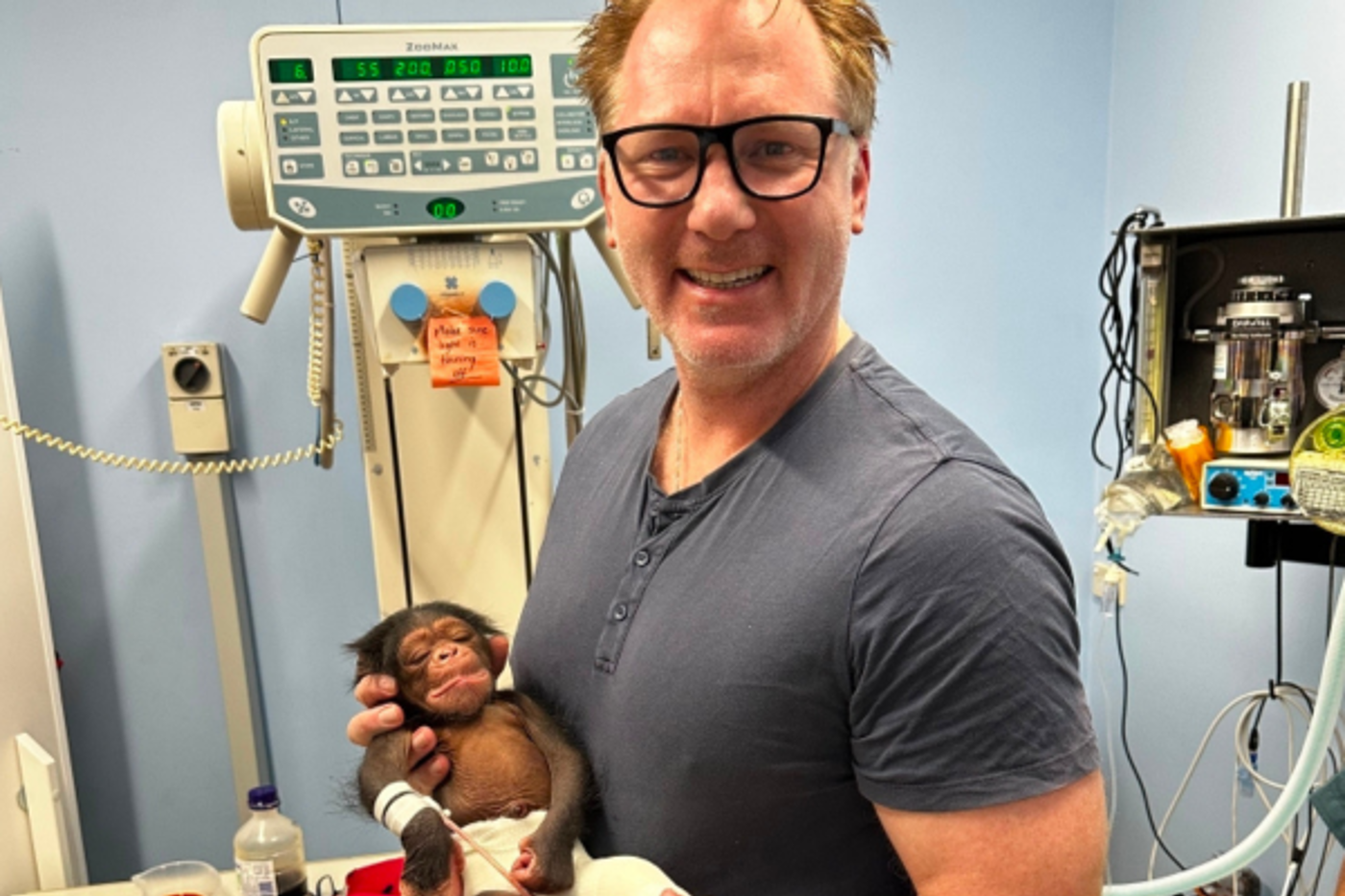
Dr Wheatley with baby Cassie.
“Over the years Greg has contacted me about advice on a few injured animals but as soon as I saw the picture of the little chimp with its bent leg, I said, I’ll be there in five,” said Dr Wheatley.
“Once it was sleepy enough we took a number of x-rays to determine the best course of action. “It was a decent break.”
Stepping into unfamiliar territory Dr Wheatley collaborated with Dr Muir and his veterinary team to adapt human orthopaedic techniques for the baby primate, named Cassie, popping its bone back into place before applying a tiny fibreglass cast.
“There’s a first for everything,” said Dr Wheatley.
“Given her infancy the decision to not cut her open and apply a cast was the best bet.
“She was an amazing little patient. Definitely the smallest patient I’ve ever had.”
Chimpanzees are closely related to humans in terms of anatomy, sharing approximately 98 per cent of our DNA. Just like a human patient, the delicate procedure to stabilise the limb was essential for the little chimp’s survival and future mobility.
“A significant injury like that in an infant could cause it to die of shock,” Dr Wheatley said.
Now a month old, Cassie has had her final check-up with the surgeon and her cast and bandages have been removed, as she shows strong signs of a full recovery.
“We suspected she’d need two or three weeks in a cast,” said Dr Wheatley.
“It’s great to see her in good health. She’ll be bouncing around and back with her mum in no time.”
Dr Wheatley said there has been a lot of interest from his colleagues about the care he provided.
“It’s not every day you operate on a chimp,” said Dr Wheatley.
“Everyone was pretty keen to hear about the process and have been keeping an eye on its progress.
“It’s definitely up there as a career highlight."