Categories:
Physiotherapy is often seen as a hands-on profession, making video call (telehealth) appointments seem challenging for some aspects of care. At Mater, physiotherapy telehealth is helping break down barriers to care and improve access for patients wherever they are.
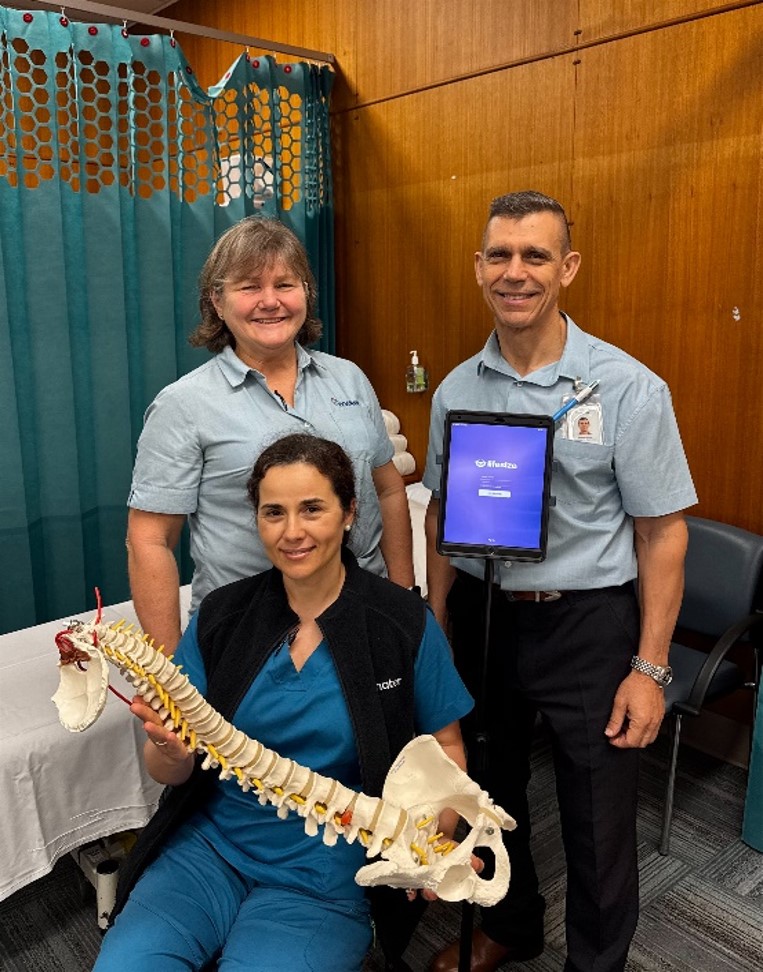 Photo: Helen O’Gorman, Stephen Erceg and Raquel Murcia Gayol
For Mater Allied Health team’s Musculoskeletal Physiotherapist, Helen O’Gorman, video call (telehealth) has become an invaluable tool in extending care beyond the walls of a clinic. Having championed physiotherapy telehealth services since 2019 and throughout the COVID-19 pandemic, Helen has seen firsthand how virtual care can help patients achieve meaningful outcomes while remaining connected to the support they need
Supporting Recovery on the Road
One of Helen's patients was a 70-year-old man awaiting knee replacement surgery due to severe osteoarthritis. Following an initial face-to-face assessment, the patient and his wife embarked on a "grey nomad" adventure around Australia. Rather than interrupting his treatment, Helen used video call telehealth to provide ongoing physiotherapy reviews while he travelled.
Helen was able to continue monitoring his progress, providing exercise guidance and supporting lifestyle changes. The patient experienced significant improvements in pain, mobility, and weight management, resulting in improved overall health outcomes and quality of life.
Regaining independence at home
Another patient, a 71-year-old man recovering from a fractured hip and subsequent joint replacement, faced significant challenges returning to everyday activities. Travelling to appointments was difficult, making video call (telehealth) an ideal option for ongoing physiotherapy support.
During virtual consultations, Helen worked closely with both the patient and his wife to prescribe safe strengthening and balance exercises, review his home environment, and provide practical advice to reduce falls risks. Over time, he regained independence, returned to driving, and no longer required mobility aids around the home.
This experience reinforced how telehealth can provide accessible, patient-centred care while supporting recovery in the environment where people live and function every day.
Connecting specialist care across distance
For a dialysis nurse living in regional Queensland, access to specialist physiotherapy support was limited by distance. Experiencing severe back pain and sciatica, she sought Helen’s expertise via telehealth while preparing for spinal surgery.
Using virtual consultations, Helen guided the patient through tailored exercises, movement strategies, and self-management techniques designed to improve core muscle activation and reduce symptoms. Despite facing significant pain and undergoing surgery, the patient remained highly engaged with her program and successfully developed strength and confidence in managing her condition.
The case highlighted how telehealth can break down geographical barriers and enable patients in rural and regional communities to access specialised physiotherapy care that may otherwise be difficult to obtain.
Looking ahead
Helen believes these experiences demonstrate its significant role in modern physiotherapy practice. Video call Telehealth can improve access to care, provide continuity during travel or recovery, support patients in rural and remote locations, and empower individuals to take an active role in their rehabilitation.
Reflecting on the future of physiotherapy, Michelle Grant, Director of Physiotherapy, says virtual care is transforming the way patients can access healthcare: "Virtual care is not about replacing traditional physiotherapy; it is about expanding access and providing care in a way that works best for each individual. At Mater, we recognise that every patient's circumstances, goals and preferences are different. Virtual care allows us to tailor services around those needs, ensuring more people can access high-quality physiotherapy support, regardless of where they live, work or receive treatment."
As we celebrate Virtual Care Week, Helen's experiences are a reminder that virtual care is not simply about technology. It is about creating opportunities for patients to access the right care, at the right time, wherever they are. Through Video call (telehealth), physiotherapy is continuing to evolve, helping more patients achieve positive outcomes and stay connected to the care they need.